Detoxification, Toxins, and You

Detoxification, Toxins, and You

Scott Wustenberg

None of this should be considered medical advice, and does not replace your own medical practitioner. This is for education purposes only.

Why Should you be concerned about toxins?

You may be thinking about performing a detoxification protocol due to some health concerns. This may clear the obvious health issues but can also benefit the body in more subtle ways.

When toxic chemicals and metabolites accumulate in the body the elimination systems become overloaded, under resourced or possibly were epigenetically down-regulated. In these scenarios, the body can become progressively more sensitive to chemical exposures, even some may not be generally considered toxic, but in this case are not able to be dealt with effectively, causing a sub-optimal situation. This can lead to a scenario of multiple chemical sensitivity, and in some cases immune system activation.

The body, overburdened with toxins will start to manifest symptoms, drawing your attention to its plight, in expectation of you rectifying the issue.

These can include:

  • Headaches
  • Nausea
  • Digestive dysfunctions-
  • Coated tongue, constipation, diarrhoea, bloating bad breath, reflux.
  • Weight gain
  • Blood sugar imbalances
  • Fatigue
  • Mood changes
  • Skin issues – rashes, hives, dermatitis, pellagra, acne, psoriasis
  • Allergy – wheezing, hives, mast cell response
  • Brain and cognitive issues – mood swings, brain fog, poor memory
Where Do we get toxin exposure from?

We are increasingly exposed to toxins every day from our food our water, the air we breath, from just the actions of daily living. This is not to mention exposure from clothes, make up and personal care products, the foam in our beds, cars seats and couches, flame retardants in our homes to name a few. These chemicals have become drivers of primary drivers of disease burden, even medications can contribute to decreasing our vitality, when they were meant to save lives.

The following is a simple list of Common Heavy Metal Toxins, Source of exposure and symptoms they might cause.

Note: This is not any way an exhaustive list, and may not include sources or kinds you’ve been exposed to.


Toxin Source Symptom/Disease Associated
Arsenic Water Asthma
  Foods/Crops grown with contaminated water – Rice Brain Fog/Cognitive issues
  Building supplies- treated timber Diabetes
  Meats (sheep dip) Dyslipideamia
  Pesticides Gout
Arsenic Cont. Chicken Skin issues
Aluminium Aluminium Foil Alzheimer’s/Dementia
  Water Brain Fog/Cognitive issues
  Food – Grains Bone Disease-osteoporosis/osteomalacia
  Building supplies – Windows/flashing Depression
  Deodorants Inflammation- Bowel
  Toothpaste Joint pain
  Cosmetics  
Cadmium Cigarettes Brain Fog/Cognitive issues
  Jewellery production Bone demineralisation
  Manufacturing- Batteries,
plastics, coatings, solar panels
Joint pain
  Mining Skin ulcers
  Smeltering Emphysema
    Hypertension
    Infertility
Lead Paint ADHD
  Building supplies – flashing, roofing Bone disease
  Plumbing Neuropathy
  Batteries Brain Fog/Cognitive issues
  Water Infertility
    Anaemia
    Mood disorder/anger/aggression
    Loss of position sense/coordination
    Loss of IQ
    Inflammation -systemic/multi-system
    Erectile dysfunction
Mercury Amalgam Dental fillings Headaches
  Seafood Metallic taste in mouth
  Fluorescent light bulbs Fatigue/Muscle weakness
  Old thermometers Loss of memory, dementia
  Medications- mercurochrome Depression, mood swings, anxiety, behaviour change
  Smeltering Thyroid disorder
  Mining Mitochondropathy

The following is a simple list of Common chemical/Toxins, Source of exposure and symptoms they might cause.

Toxin Source Symptom/Disease Associated
Solvents and Chlorinated
Solvents – Benzenes,
Methylbenzene, Toluene,
Xylenes
Paint Remover/Stain Remover Erectile dysfunction
  Vehicle exhaust fumes Headaches
  Cigarettes/Possible Vapes
(limited data -so assume it as a
danger)
Respiratory Issues
  Petrol Stations Eye Irritation
  Wood Stain/lacquer/Varnish Arthritis
  Adhesives/epoxy Resins/Glues Skin issues
  Industrial Emissions Liver Toxicity
    Alzheimer’s/Dementia
Plasticisers Bisphenols
(BPA,BPS,BPF) 
Canned Food- The linings Erectile dysfunction
  Water Bottles Allergy and Atopy
  Food in plastic packaging Liver Disorders
  Water pipes Diabetes, metaboloic syndrome
and Insulin resitence
  Sales Receipts- thermal print Dyslipideamia
  Feminine Hygiene products PCOS
  Toiletries Memory Issues
  Other plastic products- DVD’s Hyperactivity- Children
    Frequent infections
Polybrominated Diphenyl Ethers
(PDBEs) and Perfluorinated
compounds (PFCs)
Flame Retardants- Including
fabrics and materials of daily
living, clothes couches car seats
etc.
Liver Toxicity
  Electronics Erectile dysfunction
  Non stick cook ware Infertility
  Mattresses Dizziness
  Carpet ADHD
  Furniture Diabetes
  Fish Liver Toxicity
    Neurotoxicity and oxidation
    Headaches
Phthalates – plastics Asprin Headaches
  PVC- Vinyl flooring and other
products
Muscle weakness
  Cleaning products Mood disorder
  Toys ADHD
  Tools Diabetes
  Car Parts Liver Issues
  Toothbrushes Obesity
  Personal Care products Respiratory disorders
  Beauty products/makeup Frequent infections
  Food/Food packaging  
Polyaromatic Hydrocarbons
(PAHs)
Car Fumes etc Headaches
  Burning of Meat/Foods, think
BBQ charred meat
Nausea
  High Temp Cooking, Deep Frying Mood disorder
  Moth Balls ADHD
  Cigarettes/vaping/Cannabis Diabetes
  Burning of oil,coal, gas, wood,
waste material, tobacco
Liver Issues
    Dyslipidaemia
DDT, Dioxins, Furans, PCBs,
Organochlorine pesticides,
organophosphate pesticides
Food, meat fish, canned foods,
non organic
Headaches Brain fog
  Farming and agriculture Nausea/vomiting
  Old appliances Memory Deficits
  Refuse centres ADHD
    Diabetes
    Liver Issues
    Eyelid swelling
    Developmental delay and
    behaviour issues in children
    Obesity
    Hypertension
    Immune System Disfunctions
    Fatigue
    Early Menopause
    Infertility
    Dementia
    Joint Pain /Arthropathies

Occupational Toxin Exposure:

Is your job affecting your health?

As much as we might otherwise wish it, sometimes exposure to toxins is unavoidable. They can become especially difficult in the occupational setting. In these situations, its essential to try find ways of reducing exposure and mitigating effects. It’s also essential to work with a seasoned skilled professional to help reduce the toxic load in a balanced manner. Certain occupations have a greater likely risk of exposure the following is a non-exhaustive list of professions with toxic load and what types of toxins you will likely be exposed too.

Profession/Occupation Toxin
Painters Benzenes, VOCs, Arsenic, Lead, Solvents (turpentine etc)
Hairdresser Hair /dyes, ammonia, perming solution
Construction workers/builders Asbestos, benzenes, VOCs, formaldehyde, brominated flame retardants, di- isocyanates, silica, sealants , Arsenic, Lead, Solvents (turpentine etc)
Mechanics Asbestos, benzenes, VOCs, solvents, mechanical fluids
Textile workers Nylon, industrial plastic, VOCs
Plumbers Lead, Solvents, PVC, Xenoestrogens, via sewage exposure
Food workers Vapourised, High temp Industrial seed oils
  Margarines, Flavourings, colouring, bromination, Hexanes, VOCs, solvents

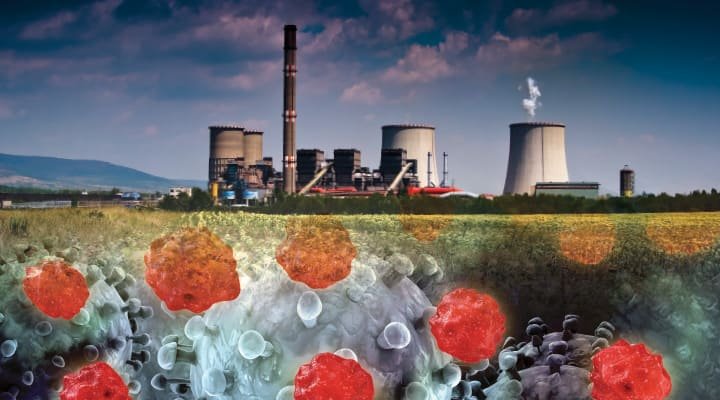
A composite image depicting a scene of industrial pollution. In the background, there's a power plant with multiple cooling towers emitting steam and a tall chimney releasing smoke into the sky. The plant is set against a pastoral landscape with green fields under a blue sky with some clouds. In the foreground, there are magnified particles representing pollutants, with a mix of what appears to be microscopic views of particulates and possibly bacteria or viruses. The particles are rendered in shades of gray, white, and red, symbolizing contamination. This image is likely intended to convey the impact of industrial activity on air quality and the environment.

Ultimately in all situations we are trying to balance all equations in our favour, in the case of detoxification we are trying to lessen the input of toxic load, while trying to enhance the body’s ability to effectively move the chemical through Phase 1 and 2 detoxification process. We also need to maintain the amount of resources available to catalyse the detox reaction and rid us of the toxin.

We are trying to enhance the body’s natural detoxification mechanisms and eliminate harmful substances.

There are many ways of going through a detox, with different degrees of difficulty to manage. Your practitioners will guide you through the process, some preferring to do specific testing for detox function, epigenetics, toxic load and resource capability before starting, and others following a protocol driven process with specific nutrients and diet to support upregulation of detox pathways.

It’s important to manage the detox in a manner that allows the body to balance the ability to release the toxins, process them and remove them from the body safely. If the body has not been optimised to support and nourish the detox pathways, the result may be an increase in side effects symptoms such as a Herxheimer response, rashes, itchiness, headaches and more.


Liver Function

Optimal liver function is important for sleep and sleep is important for detoxification, a major function of the liver. The liver plays a central role in may metabolic pathways, so any general interference with liver function can have extremely diverse effects. For example, impaired liver function may lead to problems in uric acid metabolism, and hence to gout or difficulties in maintaining circulation, to problems in protein synthesis, growth and development and even kidney function.

Functions of the liver:

1. Regulates carbohydrate metabolism
2. Has storage functions
3. Regulates protein metabolism
4. Detoxifies many toxic substances

Liver function is very important – a healthy liver plays a role in maintaining a healthy weight as it is the organ in the body that detoxifies the blood stream.

Phase 1 Detoxification

The phase 1 pathway of detoxification involves a group of enzymes collectively called Cytochrome P450. During phase 1, toxins are broken down usually by oxidation, reduction and hydrolysis. This can either transform the toxin into a water-soluble form which allows excretion by the kidneys or converts it to a more chemically active form to be metabolised further by phase 2.

Phase 1 detoxification results in the production of free radicals as the toxins are transformed. Without sufficient antioxidant protection, these free radicals can damage the liver and other body tissues.

Phase 1 also must be balanced by phase 2, to finish the detoxification process and if phase 2 detoxification is not working efficiently, toxic intermediates can build up in the body causing damage.

Nutritional Support for Phase 1 Liver Detoxification

Product Nutrients Action Dose
Sleep and Detox Nutrients
Niacin, riboflavin, zinc, magnesium, thiamine, quercetin, folic acid, vitamin B6, Vitamin C, high protein diet, leucine, isoleucine and valine Regulate phase 1 activity. B Vitamins are co-factors for enzymes involved in Phase I detox activities.
1 serve per day
Cysteine, glycine, glutamine, vitamin C Precursor nutrients for glutathione production; counteracts free radicals produced through phase 1 detox.
Vitamin A, vitamin E, zinc, selenium, magnesium, manganese, quercetin Antioxidant nutrients to counteract and neutralise free radicals produced from phase I detox


Phase 2 Detoxification

There are differing pathways in phase 2 liver detoxification. Certain toxins are bound (conjugated) by different substances to be excreted. A few of these pathways are briefly explained below.

Glucuronidation

In the process of glucuronidation, glucuronic acid is added to toxic compounds. Oestrogens are bound this way, as are many drugs, such as steroids, morphine, diazepam, aspirin and salicylates. These substances are then excreted in either urine or bile. A yellow sclera (the white of the eye) and jaundice are signs of decreased glucuronidation.

Sulphation

An informational graphic detailing Phase 2 of the human body's intermediary metabolism for water-soluble waste. The phase is represented by a tan arrow titled "Phase 2 (Conjugation Pathways)" which includes various biochemical processes like sulfation, glucuronidation, glutathione conjugation, acetylation, amino acid conjugation, and methylation. To the right, a list of "Nutrients Needed" for this phase is provided, including Methionine, Cysteine, Magnesium, Glutathione, Vitamin B5, B12, Vitamin C, Glycine, Glutamine, Folic Acid, Choline, and Taurine. The end of the process points to a blue area indicating that the water-soluble waste is "Eliminated via: Urine, Bile, Stool." The background transitions from a medium blue at the bottom to a lighter blue at the top, with a slight gradient effect.

Sulphation is the major pathway for detoxification of amine neurotransmitters and steroid hormones including testosterone and thyroid hormone. It also binds substances such as preservatives and artificial food colourings. These substances are converted into soluble forms to be excreted in the urine or bile.

This pathway requires sulphur containing compounds to act as sulphur donors for the process. These usually include the amino acids cysteine, N-acetylcysteine, methionine and taurine.

Glutathionation

This is the process of glutathione conjugation, which binds toxins such as heavy metals, pesticides and solvents, to be excreted in the urine or bile. High levels of exposure to toxins, therefore depletes glutathione quickly leading to increased susceptibility to diseases such as chronic fatigue syndrome.

Drugs detoxified by this process include paracetamol, certain substances in cigarette smoke, antibiotics, some insecticides and the heavy metals mercury, cadmium and lead.

Glycination

Glycination is involved in the metabolism of salicylic acids and benzoic acids for elimination. Glycine is the most important amino acid for this process.

Acetylation

Acetylation involves the conjugation of substrates with acetyl CoA. This substance is produced within the body and is also involved with other aspects of metabolism including the Krebs cycle.

Methylation

Methylation involves conjugation of a substrate with a methyl group. Methionine is the chief methyl donor. Methionine and cofactors such as choline, vitamin B12 and folic acid are involved in the synthesis of SAMe (s-adenosylmethionine). SAMe dependent enzymes catalyse methylation reactions. It may be possible to measure serum homocysteine, vitamin B12 and folic acid levels to determine methylation reactions. High homocysteine, lower B12 and folic acid may indicate a decrease in methylation capacity. This is often the pathway most often disturbed in chemically sensitive patients.

Testing

Functional Liver Detoxification Profile


Nutritional Support for Phase II Liver Detoxification

Product Nutrients Action Dose
Sleep and Detox Nutrients
Calcium-d-glucarate, magnesium Supports
glucuronidation
pathway
1 serve per day
Glycine, glutamine Supports glycination pathway
Cysteine, glutamine, glycine, selenium, vitamin B6, B12, folate, rosemary Supports glutathionation pathway and glutathione production
Cysteine, carnitine, pantothenic acid Supports acetylation pathway
Cysteine, taurine, vitamin A, adequate protein Supports sulphation pathway
Betaine (TMG), vitamins B12, B6, folic acid Supports methylation pathway

Additional Supplements to Consider

Product Nutrients Action Dose
LMII Methionine, taurine, choline, vitamins B12, folic acid, B6, magnesium, glutamic acid Supports phase II pathways including methylation and sulphation 2 tablets twice daily
Detoxification Nutrients Glutamine, cysteine, broccoli sprout extract, garlic, Supports phase II pathways including glutathionation;
2 tablets twice daily
  vitamin C, selenium, zinc, pine bark extract, grape seed extract provides antioxidant support.
An infographic explaining the two-phase process of toxin metabolism in the human body. Phase 1, labeled "FAT-SOLUBLE TOXINS," is represented by a green oval and includes the Cytochrome P450 enzymes responsible for oxidation, reduction, hydrolysis, hydration, and dehalogenation. Below this phase, a list titled "Nutrients Needed" includes Vitamins B2, B3, B6, B12, Folic Acid, Glutathione, and Flavonoids. Phase 2, labeled "WATER-SOLUBLE WASTE," is shown as a tan arrow pointing towards an elimination method, with processes such as sulfation, glucuronidation, glutathione conjugation, acetylation, amino acid conjugation, and methylation. The nutrients needed for this phase include Methionine, Cysteine, Magnesium, Glutathione, Vitamin B5, B12, Vitamin C, Glycine, Glutamine, Folic Acid, Choline, and Taurine. The final elimination of the water-soluble waste is via urine, bile, and stool, as indicated by the blue square at the end of the process. The background is a gradient from dark to light blue, symbolizing the transition from fat-soluble to water-soluble substances.

Detoxification in Practice

After testing and data collection your practitioner will design a specific detox program for you that will likely involve changes in diet, lifestyle and environmental exposures. It may involve supplements similar to the ones above, to enhance phase 1 and 2 capacity and the ability to eliminate chemicals and toxins from the body.

Initial Steps:

  • Identify sources of toxin exposure, reduce or remove.
  • Identify and procure foods suitable for the protocol and any supplements.
  • Focus on sleep hygiene.

Prime the Body for Detox Protocol

It is ideal to start detoxification gently to minimise Herxheimer reactions, and allow the body to tolerate the release of toxins.

  • Consider starting with Colonic Hydrotherapy to remove bowel bacteria that may be harmful and clear the bowel of waste material and biofilms, allowing for better absorption and waste removal.
  • Consider infrared/classic sauna of steam room detoxification. Remember to shower and wash sweat off the skin immediately after sauna. This is to prevent reabsorption.
  • Increase hydration. 35 mils per kg of body weight is generally safe and sufficient.

Start the Detoxification Protocol

  • While the protocol is in process, support the liver, its function and capcity to eliminate and excrete.
  • Binders may also be helpful here.

Post Protocol

  • Maintain hydration
  • Continue with sauna
  • Continue with low toxin exposure in lifestyle
  • Focus on sleep

To wrap up, it’s really important to know about toxins around us and try to avoid them as much as we can. We can’t get rid of all toxins, but we can definitely reduce how many we come into contact with. Detoxing isn’t just something you do once; it’s about making better choices every day, like what you eat, where you live, and how you work. If you’re worried about toxins, talk to a doctor or health expert to make a plan that’s right for you. By helping your body get rid of toxins and being careful about what you’re around, you can feel better and be healthier. Let’s all try to live in a way that’s more aware of toxins and healthier for us!

Back to blog